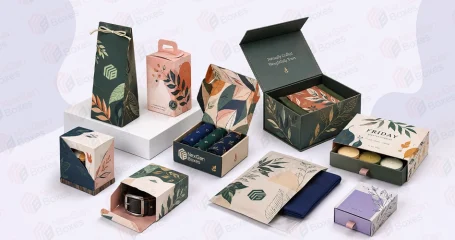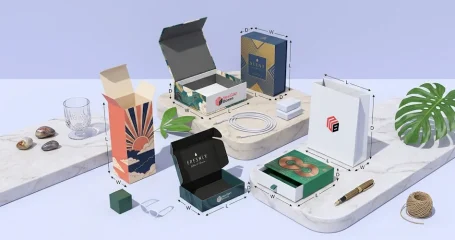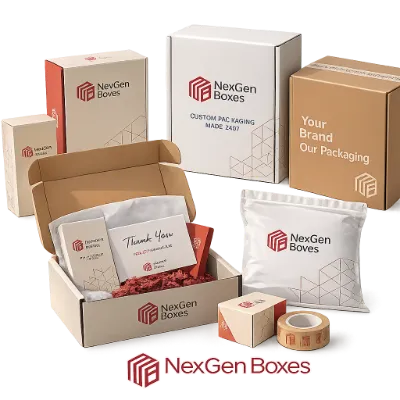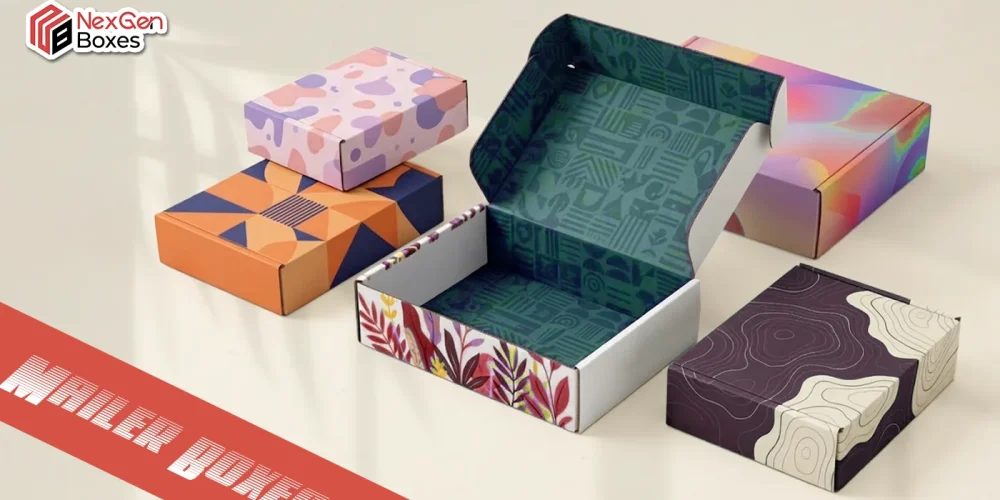
A mailer box is a folding box with an attached lid and tabs that hold it together. A mailer box can be customized to fit your desired size; it is generally made of corrugated cardboard, which is printed with your brand logo. When we discuss its composition, what is a mailer box? It has a fluted paper layer between flat outer sheets.
Online stores use them for clothing, cosmetics, subscription orders, and gift sets. If you are concerned about what a mailer box is, well, we demystify that they are flat, assemble quickly, and give businesses room for branding inside and outside the box. As the convenient design portrays ease, it doesn’t require glue or tape during assembly and can fold together with ease.
However, shipping may still require tape or an adhesive seal to keep the package securely closed. The colored cardboard box is a type of mailer box that makes it a stunning experience for the recipient, from convenience to appeal; all things are taken care of when you pick a mailer box.
Irrespective of an E-commerce store or retail store, the product delivery experience matters most. Choosing the right mailer comes down to three aspects. What are you shipping? How much protection is required, and what will the finished package cost you to send? Before choosing a mailer box, it is integral for your brand to choose the right material for mailers and design custom printing accordingly.
How Does a Mailer Box Hold Together?
Most folding mailer boxes start as one sheet of cardboard, cut and creased to form the base, walls, and lid. Whether as a retailer or an e-commerce brand, whenever you are sending orders, you definitely require mailer boxes that fit your needs.
Your brand elements, logos, and graphics are added to give it a ritzy appeal too. A mailer box is quite different than a shipping box. It can be small or large but cannot be extra large. A mailer can either be a single-piece or two-piece box with an attached lid, and it varies.
The main parts serve straightforward purposes:
- Attached lid: Folds over the opening and closes the box.
- Dust flaps: Fold inside the sides, covering gaps and helping keep the lid aligned.
- Folded side walls: Add support around the edges.
- Tuck flap or locking tabs: Hold the lid in position, depending on the design.
Folded sides can create several layers of board. This is different from double-wall corrugated board, which contains two fluted layers within the material itself. Solid paperboard or chipboard can work for lightweight presentation packaging. For parcel shipping, corrugated board generally provides more cushioning and structural support.
Which Mailer Box Types Suit Your Products?
Mailer styles differ mainly in how they assemble and close. Suppliers sometimes use different names for similar designs, so check a sample or the cutting and folding template before ordering. From black mailer boxes to pink ones, all can be curated to the perfect packaging style in a predominant way.
Are you concerned about where to get custom-printed kraft mailer boxes for retail? You can get them right away from NexGen Boxes, the first-rate packaging supplier, as we deal in custom printing of your products.
Roll-End Tuck-Front Mailer Boxes
Roll-end tuck-front, or RETF, is commonly used for mailers. They have sides that fold over to form reinforced walls. The lid closes at the front, often with tabs that help secure it. The roll-end tuck-front mailer box is a remarkable choice of mailer on which you can add brand graphics and taglines as well.
This style works well for subscription boxes, cosmetics sets, and gifts. The broad lid provides space for branding, while the opening makes it easy to arrange several products inside. An insert can help keep those products in position during delivery.
Roll-End Tuck-Top Mailer Boxes
Roll-end tuck-top, or RETT, boxes also have reinforced folded sides. Their lid uses a tuck flap that slides inside the front of the box. The closure is simple and leaves a relatively clean front panel. Check how firmly the flap holds once the box contains your product, particularly if the contents push against the lid.
Auto-Lock Bottom Boxes
Auto-lock bottom boxes have factory-glued panels that move into place when the box opens. This reduces the number of folds needed at the packing station.
They can be useful when assembly time becomes a significant part of fulfillment costs. However, an automatic bottom does not make every box suitable for shipping. The material, closure, and packed weight still matter.
Poly Mailers and Bubble Mailers
Flexible mailers are alternatives to boxes. These are alternatives used by E-commerce stores that want to try alternative ways of packaging their products. Other than boxes, they use these packaging styles sometimes to be used inside the mailer box for an extra protective layer. They use both poly mailers and bubble mailers to protect products against crumpling and breakage.
Poly Mailers
Poly mailers are plastic shipping bags suited to soft goods such as shirts and socks. They provide little cushioning or crush protection.
Bubble Mailers
Bubble mailers tend to have a padded lining that offers protection against knocks. Keep your products free from mess. They can suit small, relatively durable items. The lining alone may not protect breakable cosmetics or delicate components. Choose a box when your product needs more structure, separation, or protective packaging.
How to Choose Mailer Box Sizes?
It is pivotal to measure the product first that needs to go in the mailer. From the retail packaging, inserts, and cushioning, you can choose a box with enough usable space to keep it comfortable. A mailer package should have enough space so the product you keep doesn’t get compressed.
Mailer box dimensions tend to refer to the internal length, width, and depth of customizable, self-locking, corrugated shipping containers. Standard sizes range from small (approx. 6” × 4” × 3”), (9” × 6” × 3”) to large (up to 18” × 12” × 6”). Have a look at this table:
The sizes below are planning examples. They are not universal standards, and suitability depends on the actual product measurements.
| Size category | Example internal dimensions, L × W × H | Possible uses |
| Small | 4 × 4 × 2 inches | Jewelry, lip balm, small accessories |
| Shallow | 9 × 6.5 × 2.75 inches | A folded shirt, small paperback, compact gift set |
| Medium | 10 × 8 × 4 inches | Cosmetics bundles, small accessories |
| Bundle | 12 × 9 × 4 inches | Several products with dividers or inserts |
| Large | 14 × 10 × 5 inches | Clothing sets, larger subscription orders |
Internal and External Dimensions
Internal dimensions describe the space available for your products. External dimensions describe the outside of the assembled box. Do not calculate outside dimensions by adding a fixed amount to every measurement. Board thickness, folded walls, and the closure design all affect the finished size.
Ask your supplier for both measurements. Use the internal dimensions to check product fit, then measure the packed, closed box when calculating shipping.
Carriers may use dimensional weight, a calculation based on package volume, when determining charges. UPS explains package measurements and dimensional weight here. An oversized box can therefore cost more to ship even when its contents are light.
Choosing Mailer Boxes for Fragile Items
A sturdy box is only one part of protecting glass, ceramics, or electronics. The cushioning, product placement, and closure need to work together.
Match the Board to the Shipment
E-flute and B-flute describe the corrugated layer inside the board. E-flute is thinner and often chosen for compact printed packaging. The B-flute is thicker.
Neither flute type provides a universal weight limit. Box size, paper strength, construction, and handling conditions also affect performance.
Give your supplier the packed weight and explain what makes the product vulnerable. A glass jar and a folded sweatshirt need different protection, even if they weigh the same.
Allow Enough Space for Cushioning
Half an inch of space is not a reliable rule for fragile products. Tissue paper can improve presentation and reduce surface rubbing, but it provides limited impact protection. Choose cushioning that supports the product and prevents contact with the box walls or neighboring items. Fragile shipments may need a separate outer shipping box. For breakables, FedEx recommends double boxing with three inches of cushioning in and around the inner box. Follow the guidance appropriate to your product and packing method.
Understand Strength Ratings
ECT means Edge Crush Test. It measures how well corrugated board resists compression along its edge and helps assess stacking performance.
A rating such as 32 ECT does not guarantee that a finished package will survive drops or protect fragile contents. Ask the supplier to recommend a board grade for your complete packaging setup.
Test the Complete Package
Order samples and pack them with the actual product, inserts, cushioning, and closure. Check whether the contents move, the walls bulge, or the lid opens under pressure. For fragile or valuable goods, arrange suitable transport testing. One successful drop onto the floor does not establish that a package is ready for regular shipping.
What Affects Custom Mailer Box Costs?
A useful price comparison starts with the same specifications. A striking colored mailer box will ultimately leave the customers inspired. The costs vary by additional finishes you choose; if you want a specific color with spot UV, its cost can change. If you choose to pick a different board, the result varies. A small kraft mailer and a large box with printing on both sides are different jobs.
| Cost factor | What to compare |
| Size | Internal capacity and finished external dimensions |
| Board | Flute type, material grade, and strength |
| Printing | Number of colors, coverage, and printed surfaces |
| Finishing | Coatings, lamination, foil, or other treatments |
| Inserts | Material, complexity, and assembly requirements |
| Quantity | Unit price and total order cost |
| Additional charges | Tooling, proofs, freight, and taxes where applicable |
Larger orders often reduce the unit price because setup costs are spread across more boxes. Still, buying more than you can use ties up money and storage space. Request quotes at quantities that reflect your sales. Compare the total cost of packing and shipping each order, including cushioning and labor.
Ordering Custom Mailer Boxes From NexGen Boxes
NexGen Boxes offers custom mailer packaging, along with design support and a digital proof before printing. These services help you review the layout before production. When you are done figuring out what is a mailer? Then you can order a box, get tactile premium finishes on them, and make your brand market-ready. Explore NexGen Boxes’ packaging options and let us make custom-built packaging around your products.
For a useful quote, share your product dimensions, packed weight, order quantity, artwork, and delivery deadline. Explain whether the mailer will ship directly or sit inside another box.
If environmental specifications matter to your business, request documentation for the exact materials and finishes being quoted. Ask about recycled content, any applicable FSC certification, and recycling guidance. Paper sourcing, ink choice, and recyclability are separate questions. A particular ink does not, by itself, establish that the whole package is recyclable.
Before approving production, confirm the dimensions, board specification, artwork, price, and delivery schedule. A physical sample is especially useful when fit or protection is critical.
FAQs
What are the best mailer boxes for small businesses?
For lightweight, durable products, a stock corrugated tuck-front mailer can be a practical starting point. Choose the size and board grade around the product, then compare the cost of plain boxes with labels against custom printing.
Do mailer boxes need tape?
Many mailer boxes assemble without tape. They may still need tape, an adhesive strip, or another secure seal for shipping. Check the closure design and your carrier’s packaging requirements.
Can I ship fragile products in a mailer box?
Yes, if the box and protective packaging are suitable for the product. Some fragile items need cushioning, fitted inserts, or double boxing. Test the complete package before committing to a bulk order.
Where can I buy mailer boxes with environmental specifications?
Ask NexGen Boxes or another packaging supplier to quote against clear requirements, such as documented recycled content or certified paper sourcing. Confirm the specifications for your order before making environmental claims.
What is the difference between inner and outer mailer box dimensions?
Inner dimensions tell you what fits inside. Outer dimensions tell you how much space the closed package occupies. You need both to choose the box and estimate shipping costs accurately.