A creator opens your package and finds the product has slipped sideways, the note is buried under filler, and the lid won’t stay open. The box looked great in the mockup. In someone’s hands, it needs work.
That’s where good PR packaging starts: thinking through what happens when it arrives. If you feel confused about how to create PR packages? It is actually about choosing products- your top-tier range that you need to advertise.
When sending it to the recipient in packaging that is presentable, you need to have custom product boxes for PR designed around them. With custom finishes, custom themes, and branding elements on them, you can create these PR packages appealing as well.
With the use of secure inserts so everything fits snugly. Clear messaging and influencer-friendly aesthetics matter. Always test the finished package before production, so you know all products fit snugly within. Before launching subscription boxes, you can try the PR packages and receive feedback from content creators.
Whether you’re launching skincare, sending apparel, or introducing a new device, every choice should help the recipient understand, use, and share your product. This guide covers the practical decisions behind custom PR boxes and custom influencer mailers, from materials and printing to assembly and shipping.
1. What Is a PR Package?
A PR package is a curated shipment sent to creators, journalists, or brand partners to introduce products and encourage coverage. PR stands for public relations.
It usually includes products, protective packaging, a personal note, and information about the launch. With a public relations package, you will be building a well-rounded impression of your brand when you send them in courtesy and get word-of-mouth marketing in return.
A well-designed PR package is a conversion-focused, credibility-building opportunity. It can introduce your brand to a new audience. It is a medium through which you build trust among prospects and let influencers/creators share their experience. It often feels more authentic than traditional advertising.
Why Brands Use PR Packages
- Builds genuine credibility through creator experience rather than paid ads
- Puts your product in the hands of people who can show it in real use
- Creates shareable unboxing moments that reach new audiences organically
- Strengthens relationships with creators for future collaborations
- Gives your brand a professional, coherent first impression
For instance, a cosmetic brand can send a cleanser, serum, eyelash mascara, and moisturizer in playful colored packaging and a PR card that explains step-by-step user guidelines. A technology brand might include a device, accessories, and a quick setup guide.
The contents should make sense together. Adding more items doesn’t automatically make the package more useful.
A gifted PR box doesn’t guarantee a post. If your campaign needs specific content or a confirmed publishing date, agree on those deliverables separately.
PR Packages vs. Standard Shipping Boxes
When you hop on the search bar for the term PR package meaning, here is the actual definition: PR packages are sent to influencers to support your brand. Standard boxes are what customers receive. Both need to protect the product. PR packaging gives extra attention to how the recipient discovers it.
| Packaging decision | Standard e-commerce packaging | Influencer PR packaging |
| Main priority | Reliable delivery at a manageable cost | Protection, presentation, and clear product storytelling |
| Box style | Often a corrugated mailer or shipping carton | Corrugated mailer, rigid box, or folding rigid box |
| Printing | Can range from plain kraft to full color | Often includes coordinated interior and exterior artwork |
| Inserts | Cushioning or supports suited to the product | Fitted supports that also control product placement |
| Opening experience | Quick access | A planned reveal that remains easy to open |
These categories overlap. A well-designed corrugated mailer can work for both customer orders and creator outreach.
2. Choose the Right Box Style
Before choosing foil colors or ribbon, confirm your product dimensions, weight, order quantity, and budget per delivered package. The box affects production costs, storage space, assembly time, and freight.
Custom Rigid Boxes
Rigid boxes have firm paperboard walls wrapped in printed or decorative paper. They deliberately match launches that need a substantial feel. These include premium products such as fragrance, skincare, or electronics.
Design options include magnetic lids, lift-off lids, book-style openings, and drawers. Their main trade-off is space. Assembled rigid boxes take up their full volume during storage and shipping. Ask your manufacturer to recommend board thickness for the actual load. A small serum kit and a heavy glass bottle set need different support.
Corrugated Mailer Boxes
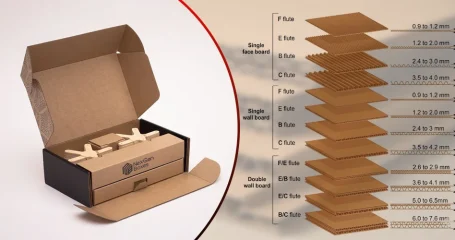
Corrugated mailers are worth considering when you need attractive packaging at a more manageable weight and cost. They can carry artwork inside and out, with custom inserts holding the products in position. E-flute and F-flute are common options.
These boxes suit apparel drops, product sampling, and larger creator campaigns. Choose the board construction around the shipment’s weight and fragility, then check the print quality on a sample.
Folding Rigid Boxes
Folding rigid boxes arrive flat and are assembled before packing. They reduce storage and inbound freight volume while keeping a rigid presentation. Include assembly labor in the quote comparison.
3. Build the Layout Around the Products
Open the sample box and look at it from above. Can you immediately tell which product matters most? Are the labels readable? Can you remove each item without tipping everything out? If you are looking for what PR creation stands for? It is actually building public relationships on the basis of how ritzy, appealing, and crisp your product unboxing moment looks.
Give the main product a clear position. Place supporting items around it in an order that makes sense, especially when the products are meant to be used together. The insert should keep that arrangement intact during delivery.
Which Insert Should You Choose?
Paperboard inserts can create compartments, raised platforms, and spaces for printed cards. Foam cushions delicate items. Molded fiber is another option when tooling and production timing suit the project.
| Insert material | Where it can work well | What to check |
| EVA or EPE foam | Fragile products and items needing cushioning | Fit, cushioning performance, cost, and disposal options |
| Die-cut paperboard | Lightweight products and organized product sets | Whether the structure supports the weight securely |
| Molded pulp or bagasse | Shaped supports made from plant fibers | Tooling costs, finish, fit, and production timing |
Test every insert with the actual products. Each insert is meant to keep the intricate bottles safe from any harm. They stay seated, and lids must be able to be closed freely. The lifting out should also be without any struggle.
For a limited-edition launch box, numbered cards, campaign messages, or co-branded graphics can give the package a more exclusive feel. Seasonal campaign launches (Easter, Halloween, Christmas, New Year) also benefit from specialized artwork that helps set the product in context.
4. Make the Unboxing Easy to Film
Creators need to handle the package while keeping the product in view. Thus, PR packages for influencers are designed with this in mind. Small design decisions can make the unboxing experience easier to film.
Film a sample opening vertically. Check whether the lid artwork, products, and note fit comfortably in the frame. A wide box may look impressive on a desk but feel awkward on camera.
Add finger notches or pull tabs where needed so products come out cleanly. Test them with the actual items, especially smooth bottles or tightly fitted jars.
Use contrast where it helps. A pale bottle can disappear against a pale insert. Keep product names readable. Strong contrast is useful; a busy background that competes with the label isn’t.
Choose finishes with a purpose:
- Soft-touch lamination adds a smooth, velvety surface.
- Spot UV adds gloss (and sometimes texture) to selected artwork.
- Foil stamping gives logos or small details a metallic finish.
Request a physical sample to check glare, fingerprints, scuffing, and how the finish looks on camera. Keep the opening sequence simple. A sleeve, tissue layer, or reveal card can create a moment. Too many closures and compartments make opening the package feel like a task.
5. Write a PR Note That Helps
Your PR card should explain why you sent the product and what the recipient needs to know. Keep the introduction personal and specific. If you mention their work, reference something relevant. Raise the charm of your custom influencer mailers when you pair them with personalized notes and a user guide.
Include the product’s purpose, basic instructions, and a contact for questions. Add your social handle and campaign hashtag where they’re easy to find. For longer information, use a QR code linking to product details, images, ingredients, or campaign resources. Test the printed code on the final card.
For campaigns reaching U.S. consumers, ask creators to clearly disclose that the product was provided free if they feature it. A plain statement such as “Brand sent me this product for free” works better than relying only on vague tags like PR or gifted. Video disclosures should appear in the video. Keep gifting instructions separate from any paid content requirements.
6. Reduce Waste Without Compromising Protection
A small product in an oversized box leaves the recipient with a lot to dispose of. Fit the box to the contents, then choose supports that provide enough protection.
If responsible fiber sourcing matters, ask your supplier about FSC-certified packaging and confirm which label applies (FSC 100%, FSC Mix, or FSC Recycled) before adding any claim to your artwork.
Soy-based or vegetable-based ink does not automatically mean zero VOCs. Ask about the specific ink rather than making a broad claim.
Give accurate disposal instructions. Ask how coatings, adhesives, foam, magnets, and other components affect recycling. Make removable parts easy to separate. Avoid printing “100% curbside recyclable” without checking the finished packaging and local collection options.
7. Plan Assembly and Shipping Before Production
Ask for a complete quote covering the box, insert, printing, finishes, tooling, assembly, and freight. Then add the cost of packing the products and shipping each completed package. A low box price can hide a costly fulfillment process.
Allow for dimensional weight. A lightweight box can still be expensive to ship if it takes up a lot of space. Dimensional weight is calculated as:
Length × width × height ÷ the carrier’s applicable divisor
Confirm the divisor and measurement rules with your carrier. Measure the completed shipping package, including any outer carton.
For a decorative rigid box, plan a suitable outer shipping carton to protect the surface. A corrugated PR mailer may ship directly. Decide whether visible labels and possible transit scuffs fit the presentation you want.
Before the full run, assemble the package exactly as recipients will receive it. Check product fit, print quality, opening ease, packing time, and shipping protection. A digital proof confirms artwork placement. It cannot show whether a bottle comes loose in delivery.
Ready to Create Your PR Packages?
Send your packaging manufacturer the product dimensions, weights, quantities, delivery deadline, and budget. Include the artwork and any opening features you have in mind. Ask for a structural recommendation and a physical sample before placing the full order.
A successful PR package arrives intact, explains the product clearly, and feels easy to open. Get those details right, and the design has room to do its job.
Frequently Asked Questions
What should a PR package include?
The product or product set, suitable protection, a personal note, essential instructions, and contact details. Add campaign information where relevant. Every extra item should have a clear purpose.
What is the minimum order quantity for custom PR boxes?
MOQs depend on the supplier, box construction, printing method, and finishes. Ask for quotes at several quantities. Digitally printed corrugated mailers are often worth exploring for smaller runs.
How early should you start?
Get a schedule covering design, sampling, revisions, production, freight, and fulfillment before setting the mailing date. Complex structures and overseas shipping need more time. Leave room to correct the sample.
What board thickness is best for a luxury PR box?
There is no universal thickness. Product weight, box size, structure, and shipping protection all matter. Ask the manufacturer to recommend a specification and show it with a packed sample.
How much do custom PR packages cost?
The total depends on quantity, dimensions, materials, inserts, finishes, labor, and shipping. Compare the cost per completed, delivered package so each quote covers the same work.
Can a PR package guarantee influencer coverage?
No. Gifting leaves the posting decision with the recipient. If you need guaranteed deliverables, arrange them directly and document the terms.