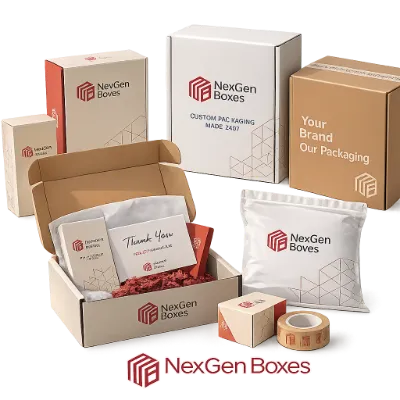
Choosing between custom folding cartons and rigid boxes is one of the most important packaging decisions a brand can make. As packaging experts, we want to walk you through both options clearly, so you can select the format that best supports your product and your business goals.
Folding cartons are retail-ready boxes engineered as fitted packaging systems that keep products safe, organized, and presentable. For many customers, a folding carton is their first physical interaction with your brand on the shelf.
Rigid boxes are built differently. They are manufactured from premium-grade materials with a refined chipboard core, and board thickness typically ranges from 1.5 to 3 millimeters depending on the product they need to support. Rigid boxes arrive pre-assembled and shelf-ready, which is why they are also known as setup boxes. They are designed to set your product apart from the competition, and their weight and finish often turn simple packaging into a keepsake, one that leaves a lasting impression long after the purchase.
Investing in the right retail packaging builds trust with buyers and helps your brand stand out in a crowded market. In this guide, we will explain the core differences between rigid boxes and folding cartons, how each protects your product, the value each brings to your business, and how to decide which one is right for your product line.
What Is the Difference Between Folding Cartons and Rigid Boxes?
At NexGen Boxes, we offer a full range of packaging solutions. Before placing an order, it helps to understand that the real difference between rigid boxes and folding cartons comes down to three things: structural rigidity, board thickness, and how the boxes are shipped.
Rigid boxes are non-collapsible containers made from 60pt greyboard, finished with a decorative outer wrap, and shipped fully assembled in their final three-dimensional form.
Folding cartons are made from thinner paperboard, typically 12pt to 28pt, usually single-ply SBS. They ship flat with pre-scored creasing lines and fold into shape once they arrive.
What Are Folding Cartons?
Folding cartons are the boxes you see on retail shelves every day, from custom mini cereal boxes and soap boxes to cake mix boxes and apparel boxes. They are lightweight, ship flat, and assemble in seconds.
Paper Grades Folding cartons are made from single-ply paperboard. The two leading virgin fiber grades are Solid Bleached Sulfate (SBS), a pure white and highly printable board, and Folding Boxboard (FBB), a lightweight, stiff, multi-layer board.
Weight and Caliper Material weight typically falls between 250 and 600 GSM, which corresponds to roughly 12pt to 28pt board caliper, or about 0.3mm to 0.8mm.
Printing and Assembly Graphics are applied through direct printing on the paperboard. Cartons ship Knocked Down Flat (KDF), which reduces warehouse space and shipping volume.
Common Styles Popular formats include tuck top boxes and self-erecting auto bottom boxes, which assemble quickly by hand or on automated packing lines.
Ordering custom folding cartons or custom printed folding cartons gives your retail brand a strong, professional presence while keeping costs low and quality high.
What Are Rigid Boxes? (Also Known as Greyboard or Setup Boxes)
Rigid boxes, sometimes called setup boxes or greyboard boxes, are non-collapsible three-dimensional containers made from thick, dense board that holds its shape permanently once assembled.
Heavy Board Core Rigid boxes are built with a refined chipboard core, or greyboard, ranging from 1.5mm to 3mm (60pt to 120pt), up to four times thicker than standard folding carton paperboard.
Outer Wrapping Thick chipboard cannot be printed on directly without cracking, so it is converted into greyboard and wrapped in a decorative litho-printed sheet, such as art paper, linen, or foil, glued over the exterior.
Internal Protection Rigid boxes are frequently paired with custom foam inserts or molded trays that hold delicate items securely in place.
Unboxing Performance The solid construction gives rigid boxes strong crush resistance. Once assembled, they hold their shape permanently and require no additional support during handling or storage.
Custom rigid packaging and luxury rigid gift boxes go through specialized finishing that communicates value the moment a customer picks them up. This makes them a natural fit for high-end products such as flagship electronics, fine jewelry, luxury cosmetics, and spirits.
Folding Cartons vs. Rigid Boxes: Side-by-Side Comparison
| Category | Folding Cartons | Rigid Boxes |
| Material | Single-ply paperboard (SBS, FBB) | Thick greyboard or chipboard, wrapped in decorative paper |
| Thickness | 250 to 600 GSM (12pt to 28pt) | 1.5mm to 3.0mm (60pt to 120pt) |
| Shipping and storage | Ships completely flat (KDF) | Ships pre-assembled in 3D form |
| Warehouse footprint | Minimal space required | Requires significant storage space |
| Freight cost | Low | Higher, due to dimensional weight |
| Protection level | Well suited to light to medium retail goods | Superior crush resistance |
| Unboxing experience | Clean and functional | Weighted and premium, elevating perceived value |
| Popular styles | Tuck top, auto bottom | Telescope lid and base, magnetic closure |
Why Rigid Boxes Cost More: The Trade-Offs
Rigid setup boxes deliver a premium presentation, which is why they are the first choice for brands selling luxury gift products. Step into any high-end retail store and you will see magnetic closure boxes, two-piece rigid boxes, and one-piece setup boxes throughout the store. Brands accept the added cost because the visual and tactile impact drives more sales at the point of purchase.
Understanding the trade-offs of rigid packaging helps you calculate the true total cost of ownership before placing a bulk order.
Higher warehouse storage overhead. Rigid boxes do not fold flat. A single warehouse pallet that holds 10,000 flat folding cartons might only fit 500 to 800 pre-built rigid boxes. Folding cartons offer a clear space-saving advantage for businesses with limited storage.
Higher shipping costs. Shipping carriers calculate charges using dimensional weight, which is based on box volume rather than physical weight. Because folding cartons ship flat, they carry a significant cost advantage over pre-assembled rigid boxes.
Longer fulfillment setup time. Rigid boxes arrive pre-constructed, which speeds up manual packing but requires a larger upfront investment in freight and storage. It is worth factoring this into your fulfillment planning early on.
Where Folding Cartons Fall Short for Premium Product Lines
While folding cartons perform well across mass retail, they can become a liability for certain premium products. They are not well suited to heavy internal fixtures like foam trays, and they can buckle under the weight of glass components. Folding cartons remain cost-effective to manufacture, but they do require manual or automated setup before filling.
More importantly, they can come across as forgettable. In the luxury market, a folding carton can unintentionally signal a budget brand. If your product retails above fifty dollars, a folding carton risks undermining its perceived value before the customer even opens the box. Rigid boxes are not simply an added expense. They are a meaningful part of how your brand is remembered.
When Does a Folding Carton Make Sense?
Folding cartons remain the preferred packaging solution for high-volume consumer goods. They ship flat and assemble in seconds. Folding cartons are a strong choice when:
- Your product retails under thirty to fifty dollars and needs to stay cost-efficient
- Warehouse space is limited and you need maximum storage density
- Your product is lightweight, such as cosmetics, cereal, tea, pharmaceuticals, or apparel accessories
- You need integrated hang tabs or die-cut windows for shelf visibility
- Recyclability and a lower shipping footprint are priorities
- Your packaging budget needs to stay near a dollar fifty per unit
When Does a Rigid Box Make Sense?
Rigid boxes justify their higher cost in specific situations where durability and presentation matter most:
- High-value retail products. Items retailing above one hundred dollars can more easily absorb the added packaging investment.
- Luxury unboxing experiences. Gift items, flagship technology, and limited editions benefit from a heavier, more deliberate opening experience.
- Heavy or delicate items. Spirits bottles, glass perfume jars, and precision electronics need the added wall strength that rigid boxes provide.
- Keepsake value. Packaging that customers are likely to keep and reuse continues to represent your brand long after the sale.
How to Choose: A Simple Decision Framework
- Evaluate your price point. Products under $20–30 rarely justify the cost of rigid packaging. Once a product moves into a premium tier, lightweight packaging can undercut the price you are asking customers to pay.
- Assess your production volume. Folding cartons scale more efficiently at high volumes. Rigid boxes are better suited to limited runs, seasonal collections, or higher-margin products.
- Consider reusability. If customers are likely to keep the box, a rigid magnetic closure style continues to represent your brand well after purchase.
- Consult your supplier. Knowing how to choose a custom packaging manufacturer starts with requesting physical CAD samples or digital mock-ups.
Final Thoughts
The right packaging builds trust with your customers and reflects the quality of what is inside the box. We offer rigid boxes wholesale as well as custom folding carton runs in bulk, so you can choose the format that fits your product and your business.
Get started with NexGen Boxes. Our team is ready to help you design packaging that reflects your brand and helps your business stand out in a competitive market.
Frequently Asked Questions
What is the main difference between folding cartons and rigid boxes?
The main difference is their construction. Folding cartons are made from lightweight paperboard and supplied flat for easy assembly. Rigid boxes use a thick greyboard core wrapped in printed or decorative paper. They arrive assembled and retain their shape during use.
Are rigid boxes more expensive than folding cartons?
Rigid boxes usually cost more because they require thicker materials, more production work, and additional storage space. Their assembled structure may also increase shipping costs. Folding cartons are generally more affordable, especially for large packaging orders.
Which packaging option is better for shipping and storage?
Folding cartons are usually better for saving shipping and warehouse space. They are delivered flat, allowing more units to fit into each shipment. Rigid boxes occupy more room but provide greater strength, protection, and presentation.
Can folding cartons still look premium?
Yes. Quality printing and finishes such as foil stamping, embossing, spot UV, and soft touch coating can give folding cartons a premium appearance. They offer an attractive presentation at a lower cost, although they do not provide the same weight and solid feel as rigid boxes.
What products are best suited for rigid boxes?
Rigid boxes are ideal for valuable, fragile, luxury, and gift products. Common applications include jewelry, cosmetics, perfumes, electronics, watches, and premium accessories. Their solid construction also creates a memorable unboxing experience that can improve the perceived value of a product.
How do I decide which packaging format is right for my brand?
Consider your product value, order quantity, protection needs, storage space, shipping costs, and desired customer experience. Folding cartons work well for cost conscious brands and large production runs. Rigid boxes are better suited to premium products that require stronger protection and an impressive presentation. The NexGen Boxes team can review your product requirements and recommend the most suitable option.